
June 2026 Clinical Supervision Topic: Processing Emotions through the AEDP Change Triangle
Welcome back dear colleagues and friends.
We are doing the 5th step in our rupture and repair work: After all is said and done (the whole strike-when-the-iron’s-cold concept), and once safety is restored, we turn our attention to a simple and powerful question:
What was all of that like for you?
This is where some of the deepest healing often occurs.
We are going to do this through the very effective AEDP tool of the change triangle. (Huge thank you to Jennifer who reminded me recently of the power of this tool).
The Change Triangle offers a gentle roadmap for helping clients move beyond thoughts and narratives and into the emotional experience itself. In this context, we're using it to explore the residual impact of the rupture: What emotions were stirred? What happened inside the client? What needs emerged? And what remains with them now that the immediate crisis has passed?
Let's take a look at how this process unfolds.
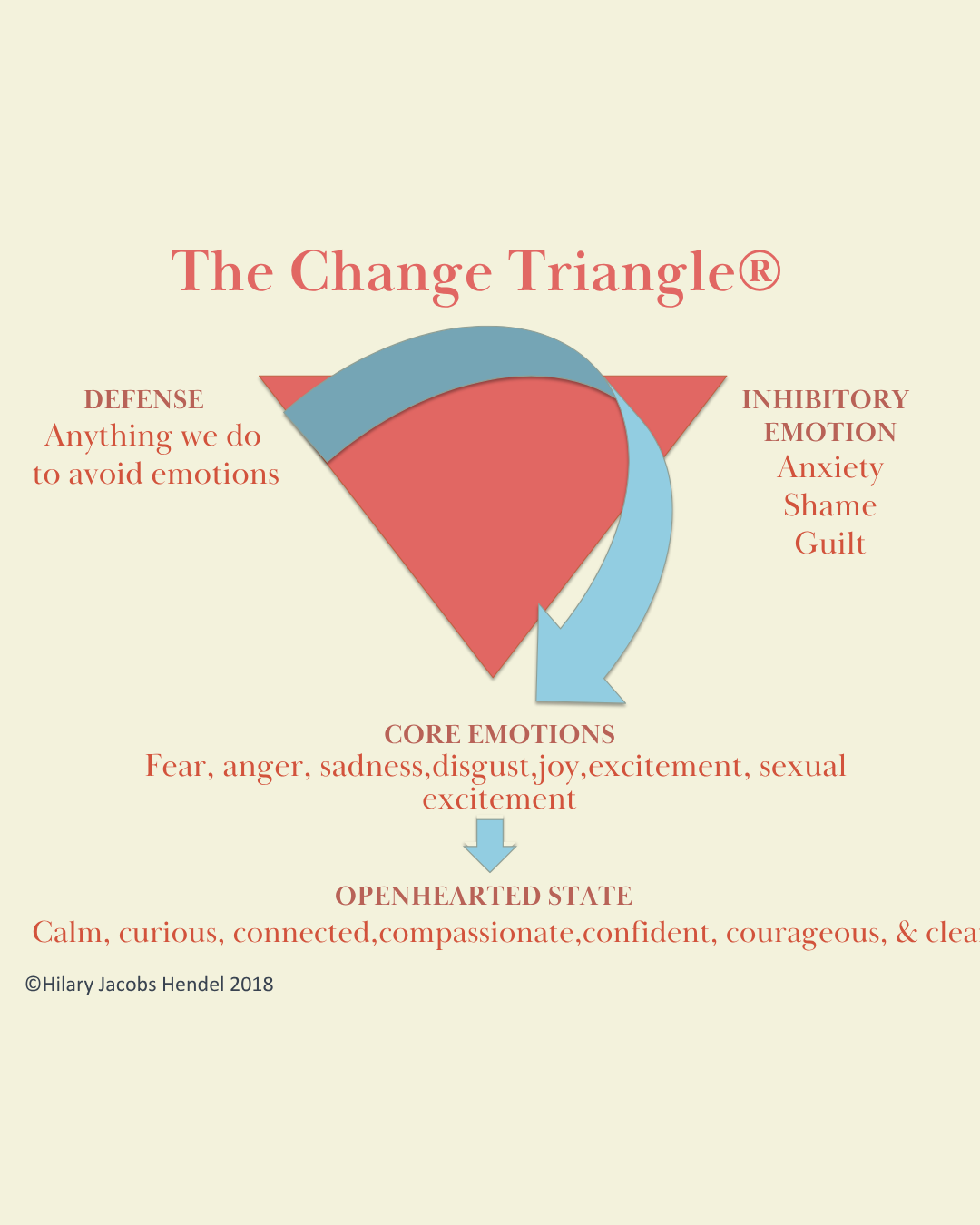
In preparation for supervision this month, feel free to read more about it here, and be sure to check out the list of defenses (i.e. ways we avoid emotions).
Another resource I like to share (thanks to Mallory for sharing it with me) when I’m helping clients move through the change triangle towards accessing emotions is this chart about the felt sense of various emotions.
Our deliberate practice skill this month will be experientially guiding clients through the Change Triangle to access their core emotions.
While the model itself can be nuanced, we're going to keep it simple. Our goal isn't to perfectly execute AEDP. Our goal is to help clients move from thinking about their experience to experiencing it in the moment with us.
The process looks something like this:
Slow down.
Notice bodily experience.
Connect with emotion.
Stay with emotion.
Explore adaptive needs, wants, and impulses.
A few questions that can help guide the process:
1. Slow Down
Let's pause for a moment. What's happening right now?
As you talk about that, what do you notice?
Can we slow down and stay with this for a moment?
2. Notice Bodily Experience
What are you noticing in your body right now?
Where do you notice that?
What sensations are present? (e.g., tightness, heaviness, warmth, tension, numbness)
3. Connect with Emotion
Looking at the emotions chart, what feeling seems closest?
What emotion might be here?
If you had to guess, what are you feeling right now?
4. Stay With Emotion
Can we stay with that feeling for a moment?
What happens as you pay attention to it?
Is there more there?
5. Explore Adaptive Needs, Wants, and Impulses
What does this feeling need?
What does this feeling want you to know?
If this feeling could speak, what would it say?
Remember: you don't need to ask every question. Follow the client's experience. These prompts are simply doorways into deeper emotional processing.
Come ready to slow down, get curious, and try out some new skills.
You’re doing great.